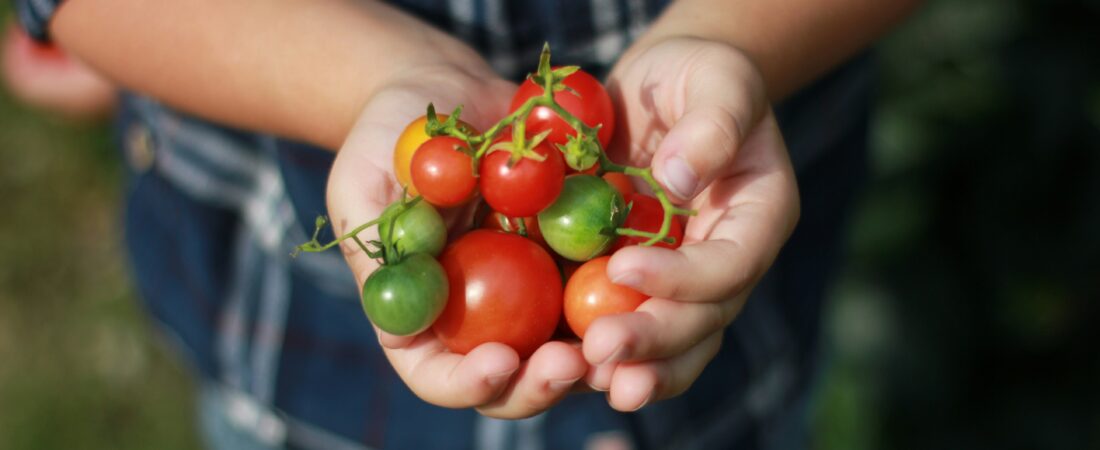
There is something about a garden that asks us to slow down.
For me, it is sitting among flowers, watching birds and bees go about their busy lives. It is dirt on my hands as I plant vegies—not helpful when I am trying to keep my nails manicured. I rarely remember my gloves. I am trying!
I love walking outside to pick something we have grown, then using it in a meal. Whether it is herbs or tomatoes, food feels different when it has travelled from garden to kitchen with family care. Setting the table together, with a small vase holding a home-grown flower, can make a family meal feel special. It is a lovely little nod to the Steiner approach, which values children sharing in the practical, beautiful work of everyday life.
Life is busy and spaces come in all sizes, but a family garden can be beautiful. It need not be a large backyard of neat garden beds. It can be one pot of basil on a balcony, a tomato plant near the back door, a few flowers for the bees, or a small patch that belongs to the children.
A little connection to where food begins
So much of what we eat arrives in packets, on shelves or in a shopping trolley. A little garden gives children the chance to see another part of the story: soil, seeds, sunshine, water, patience and the people who care for what grows.
Research backs up what many probably sense. A 2023 survey of Australian students in Years 4 to 6 found gaps in agricultural knowledge, particularly around plant-derived foods once they had been processed. This is not another job for our already-full parenting list. It is simply about giving children a chance to see that food has a beginning.
They may not remember every plant name or every gardening lesson, but they can remember the first tomato they picked, the smell of basil on their fingers, or the pride of taking something they helped grow to the family table. Those small moments can help food feel more real, more valued and more connected to the natural world.
Choose the garden that suits your family
If growing food feels exciting, begin with something familiar and useful. Herbs are lovely because children can smell them, pick them and see them become part of a meal. A pot of lettuce, cherry tomatoes or whatever grows well in your local season can be a wonderful next step. Check with a local nursery, gardening group or seasonal guide for what suits your area.
If flowers and beauty are more your thing, that counts just as much. Plant something colourful or fragrant. Create a little corner where the family can watch for birds, bees, butterflies and other visitors. A garden does not need to produce food to be valuable; it can be a place to breathe, notice and enjoy being outside together.
Of course, you can have a little of both. A few edible plants tucked among flowers can make a small garden feel useful, beautiful and alive.
Let children be part of the mess
Gardening is not meant to be perfect, and neither are the children helping in it. They do not have to do it properly to be included. Little ones can scoop soil, carry a small watering can with help, choose a plant or look for new leaves. School-aged children might label plants, count seedlings, harvest herbs or help prepare something simple to eat. Older children can choose a recipe, photograph the garden or take responsibility for a weekly watering check.
Some weeks the watering will be forgotten because, well, life. There will be muddy clothes and perhaps a plant or two that does not make it. That is all part of it. A garden is a gentle place to learn patience and that we can try again.
Australian research into a school kitchen-and-garden program found that hands-on planting, harvesting and preparing food can support children’s food knowledge, skills and attitudes. At home, it does not need to be a big program. It can simply be a shared moment outside.
A few lovely companions, if you would like one
You do not need another book to begin; one pot and a little curiosity is plenty. But if your family would enjoy extra inspiration, I have found a few lovely companions. Roots, Shoots, Buckets & Boots: Gardening Together with Children by Sharon Lovejoy has two projects called a Pizza Patch and a Moon Garden.
For a read-aloud, Up in the Garden and Down in the Dirt by Kate Messner invites children to notice the life happening above and below the soil.
If you are keen to grow food but are not quite sure where to begin, Vegetable Gardening for Beginners by Jill McSheehy is a useful grown-up reference for edible gardening. As with any gardening book, choose advice that suits your local climate.
So, perhaps this week, choose one container, one plant and one little helper. Get your hands dirty. Notice what comes to visit. Pick something if you can, and make a meal with it.
You do not need a perfect garden to grow something meaningful together.
Love,
Chelle 💗
Special Education Complex Supports and Family Support Specialist
As an Amazon Associate I earn a small commission from qualifying purchases. This helps me to continue to create resources and content.